What housing outcomes can renewable energy projects deliver for communities?
This case study is one of a series looking at how the shift to renewable energy can enable improved housing outcomes for regional communities. It showcases examples of innovative workforce accommodation and legacy housing initiatives from across Australia.
Housing legacy: This project provides increased capacity in emergency accommodation for women and children escaping family violence, with 10 housing units reserved for women from south-west Victoria.
Tilt Renewables contributed $500,000 to a new Melbourne housing development built to provide interim accommodation for women escaping domestic violence. The facility was co-funded by the Victorian Government and managed by not-for-profit community housing provider Women’s Housing Limited. Tilt Renewables’ contribution meant that 10 places in the development are reserved for women and children from south-west Victoria escaping domestic violence.
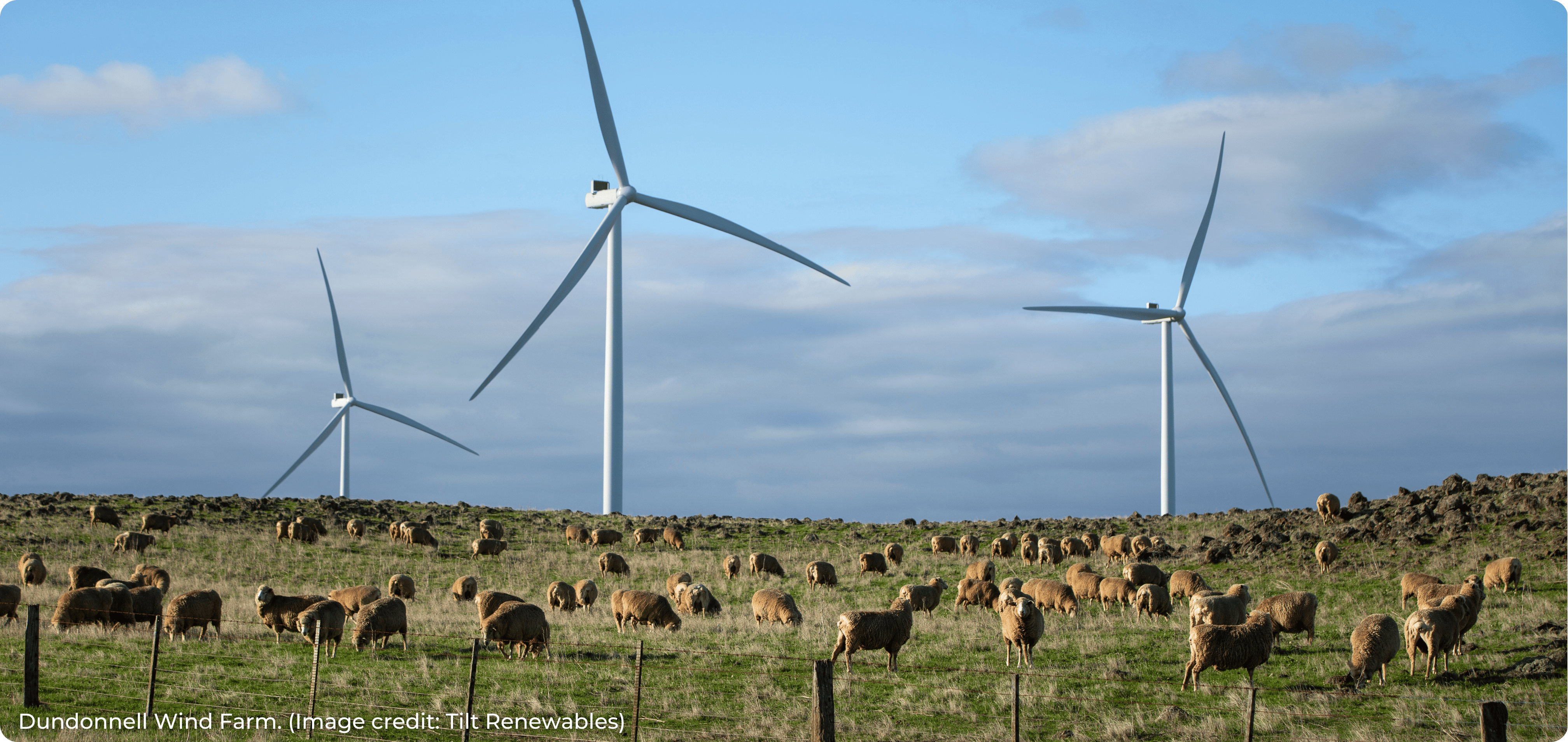
The facility, and the ability to target support for families in the south-west, helps address the shortage of crisis accommodation in south-west Victoria, where Tilt Renewables operates the Dundonnell Wind Farm.¹ Community organisations such as Emma House Domestic Violence Service or Orange Door in Warrnambool can refer women and their children to Women’s Housing Limited to receive this support.
LOCAL CONTEXT
The Wimmera south-west region has a critical social housing shortage, with 1,900 households on the priority access waiting list.² To qualify for priority access for social housing, a household must either be homeless, living in unsuitable/unsafe housing or at immediate risk of homelessness, often due to family violence. This makes the delivery of social housing, including crisis housing for those fleeing domestic violence, a priority for the region.
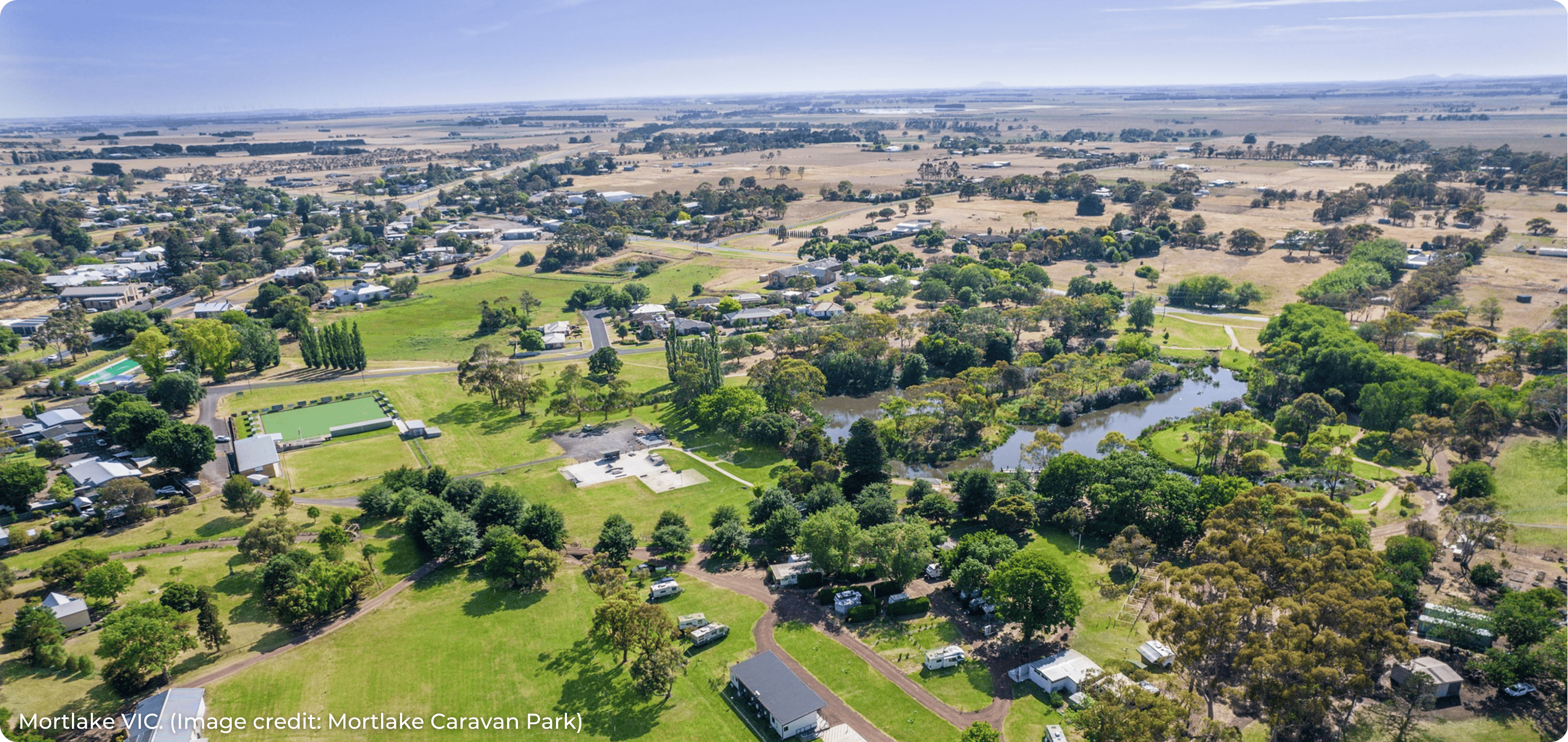
Dundonnell Wind Farm is located north-east of Mortlake, a town of approximately 1,400 in the Wimmera south-west region of Victoria. It is one of a number of wind farm projects in the area, popular due to strong and steady winds and proximity to transmission line infrastructure. As part of its community benefit plan, Dundonnell Wind Farm responded to this community-identified need and provided improved access to crisis housing.
CHALLENGES THE PROJECT IS SEEKING TO ADDRESS
During planning for Dundonnell Wind Farm, the Emma House Domestic Violence Service identified a significant shortage of housing available for women escaping domestic violence or unsafe housing situations in south-west Victoria. The project team then focused on improving the availability of interim housing to address this urgent need.
Owen Boushel, Manager Stakeholder Engagement, Tilt Renewables
The safe housing development was built outside the region, which enables women using the service to avoid their perpetrator, access support networks and services, and avoid stigma.³

WHAT HAPPENED
As part of the Dundonnell Wind Farm’s planning and development process and application to the Victorian Renewable Energy Auction Scheme, Tilt Renewables engaged with local stakeholders and conducted a Socio-Economic Impact Assessment. Local stakeholders reported there was a pre-existing shortage of accommodation for survivors of family violence in south-west Victoria. Feedback noted that increased pressure on housing, including from temporary workers’ accommodation requirements, would impact on vulnerable community members the most.
Tilt Renewables incorporated this feedback when developing its community benefit commitments and entered into an agreement with Women’s Housing Limited, committing $500,000 to support the construction of a 24-unit development in Melbourne. In return for this contribution, Women’s Housing Limited made 10 beds available each year for family violence survivors from south-west Victoria.
KEY BENEFITS THE PROJECT SEEKS TO DELIVER
- Housing support for survivors of family violence in south-west Victoria and an opportunity to access safe accommodation
- Community benefit funds targeted at some of the most vulnerable people and households in south-west Victoria
LEARNINGS FOR BROADER APPLICATION
This example demonstrates the value a Community Benefit Plan can deliver to communities, if it is developed by listening closely to community feedback and thinking creatively about how to address local needs. It requires a willingness from companies to enter into longer-term partnerships and to provide greater funding for strategically important projects.
We are working with our communities to think of what is possible with these funds and taking a longer view on what programs or initiatives can be funded on a multi-year basis. These programs compound in their effectiveness over time. Ultimately, these funds are under community control and so we are getting ideas tailored to the community coming through.
Owen Boushel, Manager Stakeholder Engagement, Tilt Renewables
The Dundonnell Wind Farm won the Clean Energy Council’s 2020 Community Engagement Award based on engagement conducted to develop its Community Benefit Plan.
The decision to fund housing for women seeking safety was informed by engagement with local stakeholders, such as Emma House Domestic Violence Service, and data highlighting the shortage of crisis accommodation in south-west Victoria.
It is important to note that targeting support for vulnerable households – in areas where there is limited access to affordable or social housing, including crisis housing – will require partnerships with and support from organisations that have high capacity, expertise and ‘shovel ready’ projects.
Read more examples of innovative workforce accommodation and legacy housing initiatives in the shift to renewable energy in our full report.
¹ Lena Tomkinson, ‘Unique Community Alliance Delivers New Housing’, Women’s Housing (15 September 2019).
² Homes Victoria, ‘Applications on the Victorian Housing Register (VHR)’, Big Housing Build (December 2024) <https://www.homes.vic.gov.au/applications-victorian-housing-register-vhr>.
³ Monica Campo and Sarah Tayton, Domestic and Family Violence in Regional, Rural and Remote Communities: An Overview of Key Issues (Australian Institute of Family Studies, 2015).