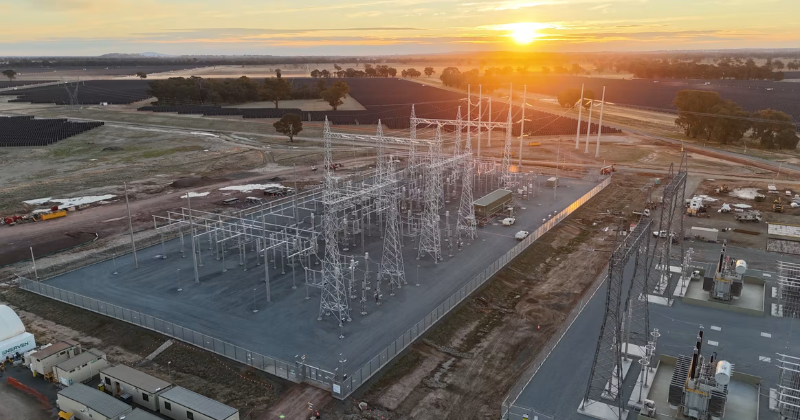
Large-scale renewable energy has been part of Australia's energy mix for decades and as a result, some of these earliest projects have reached or are now approaching retirement age. At the same time, communities and landholders across Australia are being asked to consider new renewable energy projects which, if approved and built, can be expected to reach retirement in 20-40 years, depending on the technology.
Investing now in the development of appropriate systems and markets for all renewable energy materials to be reused and recycled at retirement will help to build social licence around renewables end-of-life, including decommissioning. By maximising local reuse and recycling, decommissioning can also build economic opportunities that will benefit communities and other industries.
To support these outcomes, RE-Alliance makes the following recommendations to the Inquiry:
- Implement a mandatory, national product stewardship scheme for solar PV panels.
- State, territory and federal governments should introduce or extend policy settings that support a circular economy for large-scale renewable energy projects and invest in addressing barriers to uptake. This requires focus on, and support for, innovation and research, from design to recovery, that will ensure processes continually improve. This would include:
- Addressing the barriers to cost effective reverse logistics.
- Prioritising reuse before recycling, creating end-markets for reused products, and developing an Australian Standard to support solar panel reuse.
- Establishing circularity requirements for renewable energy materials recovery through agreements or partnerships with manufacturers and suppliers.
- Support training for installers on safe removal, testing interpretation, and second-life installation.
- Supporting innovation to improve reuse and recycling efficiency across the full suite of renewable energy materials.
- All jurisdictions should develop and adopt model project approval conditions that set baseline expectations for end-of-life outcomes, without being overly prescriptive and limiting the development and uptake of improved technologies over time.
- State and territory governments and industry should work together, in consultation with landholders and community stakeholders, to develop a consistent and industry-wide Financial Assurance Framework for decommissioning activities for new projects. This should build on current leading practice approaches and ensure that any framework is established in a way that does not erode the initial business case for investment at the capital heavy start of a project.
- For existing projects, where financial assurance was not included in project conditions or host landholder commitments, state and territory governments should consider introducing a trailing liability requirement to provide assurance that end-of-life obligations will be met.
- Consideration of end-of-life systems for reuse and recycling of renewable energy infrastructure should be included in the Federal Government’s Developer Rating Scheme, Electricity Services Entry Mechanism, Future Made in Australia and ReMade in Australia programs.
- The Federal Government should move to ensure that mandatory reuse and recycling systems are created for all large-scale renewable energy infrastructure, not just solar panels, as a matter of priority.